NARCOTRÁFICO

Pescadores gallegos se trasladan a Italia para producir narcolanchas

Redaccion
Pescadores gallegos se trasladan a Italia para producir narcolanchas
Idioma

Pescadores gallegos se trasladan a Italia para producir narcolanchas

Título: Armadores gallegos se trasladan a Italia para la fabricación de narcolanchas

Contenido completo: En primer lugar, en el año 2018, se implementaron prohibiciones en España. Ahora, en 2026 y tras varios años en los que los gallegos, reconocidos como expertos en la construcción de narcolanchas, operaron entre esta comunidad autónoma y el país vecino, Portugal ha endurecido su legislación. Así lo expusieron fuentes judiciales el 17 de mayo, momento en que se hizo efectiva una ley que, aunque no prohíbe la tenencia y fabricación de estas embarcaciones, sí incrementa su control en franjas horarias específicas.

A pesar de que estos avances legislativos han provocado un cambio en el modelo operativo de los narcotraficantes, quienes ahora mantienen una parte significativa de sus flotas en alta mar durante extensos períodos para eludir el accionar policial, la fabricación clandestina persiste, especialmente en el noroeste de España.
No obstante, las investigaciones que han podido realizar fuentes judiciales indican una nueva estrategia adoptada por los narcotraficantes gallegos: han trasladado parte de sus centros operativos de manera legal a Italia, donde, con una licencia como armador, es posible construir embarcaciones de cualquier tipo con mínimas restricciones. Así, según todas las evidencias, están llegando lanchas rápidas que cruzan el Mediterráneo en sentido contrario para participar en importantes operaciones de tráfico de cocaína al oeste de la Península Ibérica.

Para ilustrar esto, basta con recordar la más reciente operación multinacional en la que la Guardia di Finanza italiana monitorizó -probablemente mediante sistemas de geolocalización- desde el aire a varias narcolanchas implicadas en un alijo del que se lograron incautar 2.600 kilos de cocaína a 50 millas al suroeste de Lisboa. Pocas horas después, otros 2.100 kilos fueron encontrados en costas cercanas al lugar del abordaje.

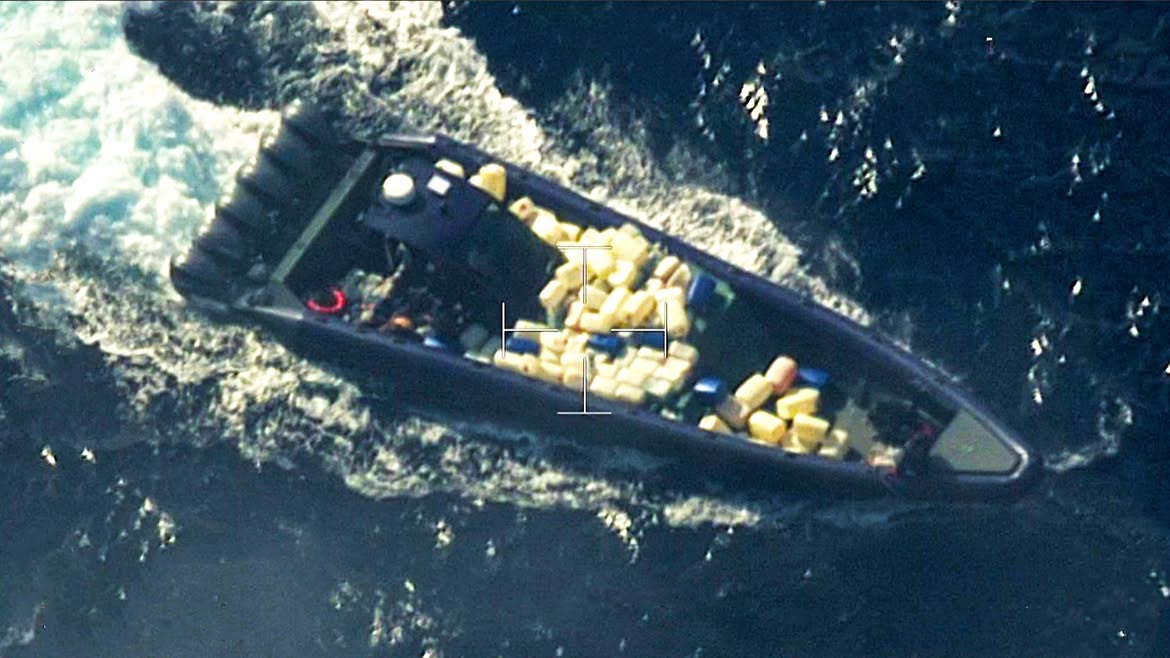
Respecto a las embarcaciones, se ha determinado que la que transportaba el cargamento confiscado, con dos españoles, un gibraltareño y un albanés supuestamente al servicio de la ‘Ndrangheta a bordo, contaba con cuatro motores fueraborda, cada uno con una potencia de 400 caballos de vapor, lo cual es inusual.

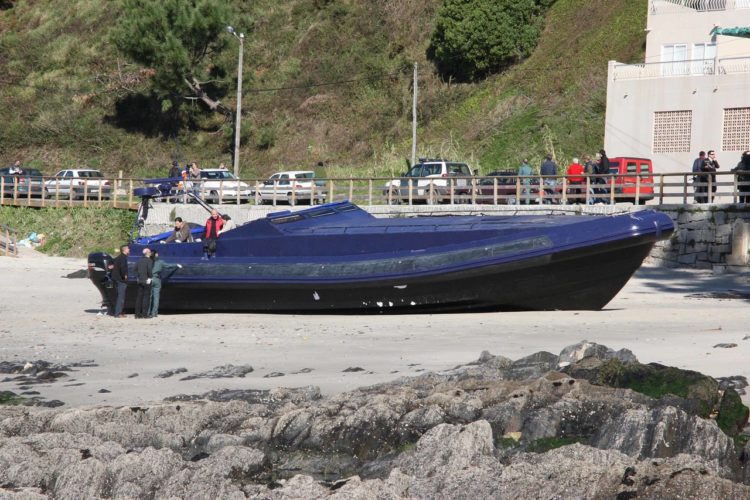
Sin embargo, los astilleros italianos habrían producido al menos una embarcación aún más grande, equipada con seis motores fueraborda, que fue fotografiada desde el aire por las autoridades italianas en las cercanías de las costas de la Península Ibérica. Su imagen acompaña el presente informe.

Expertos en navegación de alta velocidad señalan, no obstante, que dotar a las embarcaciones con cinco, seis o siete motores no les otorga una mayor velocidad ni capacidad de maniobra ante una persecución policial. De hecho, esto podría tener el efecto contrario, haciéndolas más propensas a las averías y disminuyendo su maniobrabilidad.

La embarcación observada en esta operación recuerda notablemente a la famosa Patoca, aquella embarcación emblemática construida en Italia a solicitud del célebre Manuel Abal Feijoo, conocido como Patoco, uno de los cabecillas del tráfico de cocaína en Galicia durante la primera década de este siglo, quien falleció en un accidente de motocicleta cuando se encontraba en la cúspide de su actividad.
Los pilotos con mayor conocimiento del negocio indican que construir y utilizar este tipo de embarcaciones es más un símbolo de ostentación de poder y demostración de dominio que una cuestión de utilidad técnica.

Mientras tanto, desde España, el ministro del Interior, Fernando Grande Marlaska, ha solicitado formalmente a los países vecinos de la Unión Europea y, en especial, a aquellos del sur, que adopten una normativa más restrictiva respecto a este tipo de embarcaciones que han generado numerosos problemas -incluyendo muertes- en el país y en Portugal. Sin embargo, por el momento, Italia, según se sabe, así como el Reino Unido, se están convirtiendo en centros alternativos de fabricación en comparación con los tradicionales astilleros de Galicia y del norte de Portugal.

Galician fishermen move to Italy to produce narco boats.

Title: Galician Shipowners Move to Italy for the Manufacture of Narcolanchas

Full content: First of all, in 2018, prohibitions were implemented in Spain. Now, in 2026, and after several years in which the Galicians, recognized as experts in the construction of narcolanchas, operated between this autonomous community and the neighboring country, Portugal has tightened its legislation. This was stated by judicial sources on May 17, when a law came into effect that, although it does not prohibit the possession and manufacture of these vessels, does increase their control during specific time slots.

Despite these legislative advances causing a change in the operational model of drug traffickers, who now keep a significant part of their fleets at sea for extended periods to evade police action, clandestine manufacturing persists, especially in the northwest of Spain.

However, investigations conducted by judicial sources indicate a new strategy adopted by Galician drug traffickers: they have legally moved part of their operational centers to Italy, where, with a shipowner's license, it is possible to build vessels of any type with minimal restrictions. Thus, according to all evidence, fast boats are arriving that cross the Mediterranean in the opposite direction to participate in significant cocaine trafficking operations off the western coast of the Iberian Peninsula.

To illustrate this, it is enough to recall the most recent multinational operation in which the Italian Guardia di Finanza monitored—probably through geolocation systems—from the air several narcolanchas involved in a shipment from which 2,600 kilos of cocaine were seized 50 miles southwest of Lisbon. A few hours later, another 2,100 kilos were found on the coasts near the boarding site.

Regarding the vessels, it has been determined that the one transporting the confiscated cargo, with two Spaniards, one Gibraltarian, and one Albanian allegedly in the service of the ‘Ndrangheta on board, was equipped with four outboard motors, each with a power of 400 horsepower, which is unusual.

However, Italian shipyards are said to have produced at least one even larger vessel, equipped with six outboard motors, which was photographed from the air by Italian authorities near the coasts of the Iberian Peninsula. Its image accompanies this report.

Experts in high-speed navigation point out, however, that equipping vessels with five, six, or seven motors does not grant them greater speed or maneuverability in the face of a police chase. In fact, this could have the opposite effect, making them more prone to breakdowns and decreasing their maneuverability.

The vessel observed in this operation bears a notable resemblance to the famous Patoca, that iconic vessel built in Italy at the request of the renowned Manuel Abal Feijoo, known as Patoco, one of the leaders of cocaine trafficking in Galicia during the first decade of this century, who died in a motorcycle accident while at the peak of his activity.

Pilots with greater knowledge of the business indicate that building and using this type of vessel is more a symbol of ostentation of power and demonstration of dominance than a matter of technical utility.

Meanwhile, from Spain, the Minister of the Interior, Fernando Grande Marlaska, has formally requested neighboring countries in the European Union, especially those in the south, to adopt more restrictive regulations regarding this type of vessel, which has generated numerous problems—including deaths—in the country and in Portugal. However, for the moment, Italy, as is known, as well as the United Kingdom, are becoming alternative manufacturing centers compared to the traditional shipyards in Galicia and northern Portugal.

Pescadores gallegos se trasladan a Italia para producir narcolanchas | NarcoObservatorio