
NARCOTRÁFICO

Treinta años de prisión para el narcotraficante responsable de la muerte de Carlos Esquembri.

Redaccion
Treinta años de prisión para el narcotraficante responsable de la muerte de Carlos Esquembri.
Idioma

Treinta años de prisión para el narcotraficante responsable de la muerte de Carlos Esquembri.

Título: 30 años de prisión para el narcotraficante responsable de la muerte de Carlos Esquembri

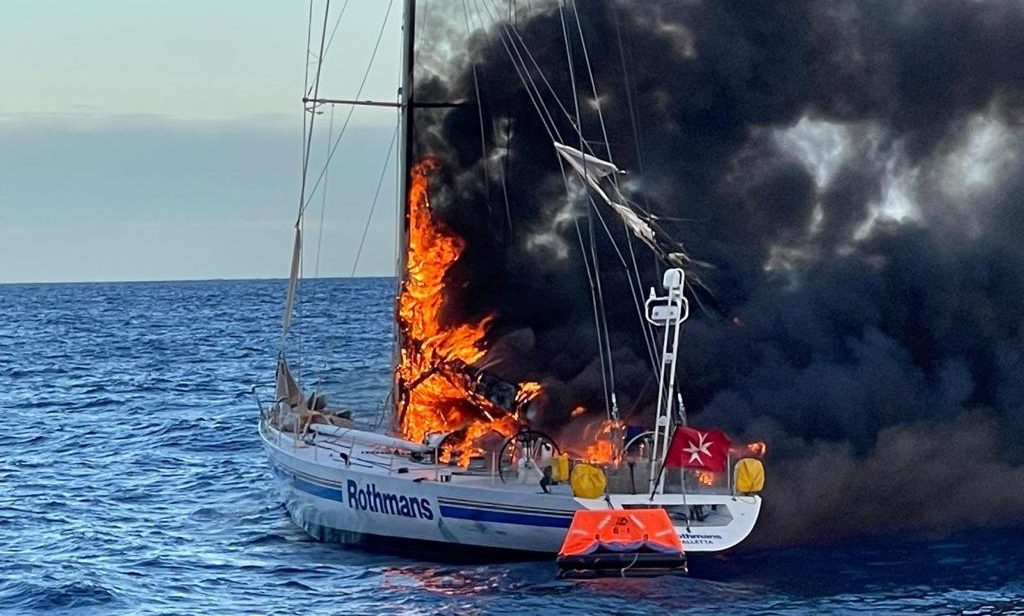
Contenido completo: La Sala Penal del Tribunal Supremo ha impuesto una condena de 30 años de prisión por los delitos de homicidio con atentado, en concurso con el de piratería, y otro contra la salud pública, al timonel de un velero que transportaba cocaína, el cual, al realizar un golpe de timón, causó la embestida de la embarcación de Vigilancia Aduanera que se encontraba en proceso de abordaje, lo que provocó la muerte por anoxia de Carlos Esquembri, el capitán de la lancha, quien había caído al agua. Los hechos tuvieron lugar el 18 de marzo de 2023 y fueron relatados en su momento por fuentes judiciales.

La Sala de lo Penal de la Audiencia había condenado inicialmente al narcotimonel a 27 años de prisión por homicidio con atentado (17 años) y tráfico de droga (10 años), fallo que fue reportado en primicia en estas líneas. Sin embargo, la Sala de Apelación de la Audiencia, al admitir un recurso de la Fiscalía Antidroga, incrementó la pena a 37 años al considerar que debía ser condenado, además, por el delito de piratería (10 años).

El acusado presentó un recurso ante el Supremo, impugnando, entre otros aspectos, su condena por el delito de piratería, argumentando que había sido condenado por el mismo hecho (el golpe de timón que dio lugar a la embestida), tanto por homicidio como por piratería. Sostuvo que la Sala de Apelación realizó una interpretación excesiva y desproporcionada del delito de piratería, ya que no se trataba de un caso de piratería marítima auténtica, como los ataques organizados a buques con el objetivo de secuestro, saqueo o rescate, y no existía organización pirata, armamento, medios de abordaje, ni un ataque dirigido a la navegación marítima internacional, sino, en todo caso, una reacción aislada y defensiva ante el abordaje del velero. Resumió que, de acuerdo con la hipótesis acusatoria, podría ser considerado un traficante, pero no un pirata.

El Supremo desestima este argumento y subraya que para confirmar la condena por piratería “basta con constatar, como ocurre en este caso, la concurrencia de los elementos que el artículo 616 ter describe, es decir, una conducta violenta, dirigida contra una embarcación en el mar o las personas que se encuentren a bordo, capaz de comprometer gravemente la seguridad de la navegación en un ámbito internacional y, por ende, de perjudicar el bien jurídico supraindividual que el precepto protege”.

Añade que “si se considerara que solo se tipifica la piratería punible cuando el ataque violento tiene como motivación el lucro, el robo o la depredación en sentido económico, quedarían excluidas del artículo 616 ter conductas de extrema gravedad que igualmente afectan la seguridad de la navegación internacional”.
“Imagínese el asalto, en alta mar, de un buque civil con el fin de matar a sus pasajeros por motivos religiosos o ideológicos, aprovechando precisamente el espacio marítimo no sometido al inmediato resguardo de un Estado. La exclusión de una conducta así del ámbito del artículo 616 ter no se ajustaría ni al tenor literal del precepto español ni a la finalidad político-criminal establecida por la Ley Orgánica 5/2010, despojando de manera injustificada la protección reforzada que el legislador quiso otorgar frente a actos ilícitos cometidos en el mar que pueden quebrantar la seguridad de la navegación”, recalca la sentencia.

Asimismo, el tribunal no comparte que la condena tanto por homicidio con atentado como por piratería infrinja el principio ‘non bis in ídem’. “En el homicidio agravado por ser los hechos además constitutivos de atentado se protege, por un lado, la vida del agente y, por otro, el principio de autoridad y el normal desarrollo de la función pública representada por los funcionarios que llevaban a cabo el abordaje. En la piratería del artículo 616 ter, en cambio, el bien jurídico protegido se sitúa en un plano distinto y supraindividual, concretamente la seguridad de la navegación marítima como requisito para la protección de la comunidad internacional frente a actos violentos perpetrados en el mar. Por ende, la coincidencia parcial del sustrato fáctico no da lugar, automáticamente, a una duplicidad de sanciones constitucionalmente prohibidas”, argumenta el Supremo.

No obstante, el tribunal considera que la respuesta punitiva por los delitos de homicidio y piratería, al originarse del mismo golpe de timón, debe llevarse a cabo mediante la aplicación de la regla más favorable del concurso ideal de delitos, estableciendo así una pena única de 20 años de prisión, a los que se suman otros 10 años por el delito contra la salud pública. En ese sentido, estima parcialmente el recurso del acusado.

Por otro lado, el tribunal rechaza el recurso presentado por otros dos tripulantes del velero condenados por la Audiencia, y confirma sus penas de 16 años de prisión a uno de ellos, por delitos contra la salud pública y por incendio (este último por haber incendiado el velero para eliminar la droga que transportaban), y de 10 años por el delito de tráfico de drogas al otro.

Thirty years in prison for the drug trafficker responsible for the death of Carlos Esquembri.

Title: 30 Years in Prison for the Drug Trafficker Responsible for the Death of Carlos Esquembri

Full Content: The Criminal Chamber of the Supreme Court has imposed a sentence of 30 years in prison for the crimes of homicide with assault, in conjunction with piracy, and another against public health, on the helmsman of a sailboat that was transporting cocaine, who, while making a sudden turn, caused the collision of the Customs Surveillance vessel that was in the process of boarding, resulting in the death by anoxia of Carlos Esquembri, the captain of the boat, who had fallen into the water. The events took place on March 18, 2023, and were reported at the time by judicial sources.

The Criminal Chamber of the Court of Appeal had initially sentenced the drug helmsman to 27 years in prison for homicide with assault (17 years) and drug trafficking (10 years), a ruling that was reported exclusively in these lines. However, the Appeals Chamber of the Court, upon admitting an appeal from the Anti-Drug Prosecutor's Office, increased the sentence to 37 years, considering that he should also be convicted of piracy (10 years).

The accused filed an appeal with the Supreme Court, challenging, among other aspects, his conviction for the crime of piracy, arguing that he had been convicted for the same act (the sudden turn that led to the collision), both for homicide and for piracy. He maintained that the Appeals Chamber made an excessive and disproportionate interpretation of the crime of piracy, as it was not a case of genuine maritime piracy, such as organized attacks on ships for the purpose of kidnapping, looting, or ransom, and there was no pirate organization, weaponry, means of boarding, or an attack directed at international maritime navigation, but rather, in any case, an isolated and defensive reaction to the boarding of the sailboat. He summarized that, according to the prosecutorial hypothesis, he could be considered a trafficker, but not a pirate.

The Supreme Court dismisses this argument and emphasizes that to confirm the conviction for piracy "it is sufficient to ascertain, as is the case here, the concurrence of the elements described in Article 616 ter, that is to say, a violent conduct directed against a vessel at sea or the persons on board, capable of seriously compromising the safety of navigation in an international context and, therefore, harming the supra-individual legal good that the provision protects."

It adds that "if it were considered that piracy is only punishable when the violent attack is motivated by profit, theft, or economic plunder, conduct of extreme gravity that also affects the safety of international navigation would be excluded from Article 616 ter."

"Imagine the assault, on the high seas, of a civilian ship with the intent to kill its passengers for religious or ideological reasons, precisely taking advantage of the maritime space not immediately protected by a State. The exclusion of such conduct from the scope of Article 616 ter would not conform to the literal tenor of the Spanish provision nor to the political-criminal purpose established by Organic Law 5/2010, unjustifiably stripping away the reinforced protection that the legislator intended to grant against illicit acts committed at sea that can undermine the safety of navigation," the ruling emphasizes.

Furthermore, the court does not agree that the conviction for both homicide with assault and piracy infringes the principle of 'non bis in idem.' "In aggravated homicide due to the facts also constituting an assault, the life of the agent is protected on one hand, and on the other, the principle of authority and the normal development of the public function represented by the officials carrying out the boarding. In piracy under Article 616 ter, however, the protected legal good is situated on a different and supra-individual plane, specifically the safety of maritime navigation as a requirement for the protection of the international community against violent acts perpetrated at sea. Therefore, the partial coincidence of the factual substrate does not automatically lead to a duplication of constitutionally prohibited sanctions," argues the Supreme Court.

Nevertheless, the court considers that the punitive response for the crimes of homicide and piracy, originating from the same sudden turn, should be carried out through the application of the more favorable rule of ideal competition of crimes, thus establishing a single sentence of 20 years in prison, to which an additional 10 years for the crime against public health is added. In this sense, it partially upholds the accused's appeal.

On the other hand, the court rejects the appeal filed by two other crew members of the sailboat convicted by the Court of Appeal, and confirms their sentences of 16 years in prison for one of them, for crimes against public health and for arson (the latter for having set fire to the sailboat to eliminate the drugs they were transporting), and 10 years for drug trafficking for the other.

Treinta años de prisión para el narcotraficante responsable de la muerte de Carlos Esquembri. | NarcoObservatorio